Kavya Mohan
Kavya successfully defended her thesis titled ‘Plant-pollinator interactions in a tropical dry deciduous community’. Congratulations.
Kavya becomes the 8th Doctor from the lab!

Behavioural and Evolutionary Ecology Laboratory
Kavya successfully defended her thesis titled ‘Plant-pollinator interactions in a tropical dry deciduous community’. Congratulations.
Kavya becomes the 8th Doctor from the lab!
Hema has been elected for the prestigious position of a Fellow of the Indian National Science Academy, commencing from January, 2027. Many congratulations.
Sudeep successfully defended his thesis titled ‘Foraging behaviour in the Asian giant honeybee Apis dorsata’. Congratulations.
Sudeep becomes the 7th Doctor from the lab!
Conference attendance grant from
the Association for the Study of
Animal Behaviour (ASAB) to
attend the ASAB winter conference
2026.
Company of Biologists Travel
Grant for International Workshop
‘Integrative Ecology in the Global
South’.
Selected to attend fully funded
New Phytologists Next Generation
Scientist meeting at IISER Pune
(Dec 2026). Awarded a travel grant to attend
the same.
Vincent Roth Fund for Systematics
Research provided by The
American Arachnological Society.
Travel grant for 23rd International
Congress of Arachnology (ICA
2026).
Congratulations to all.
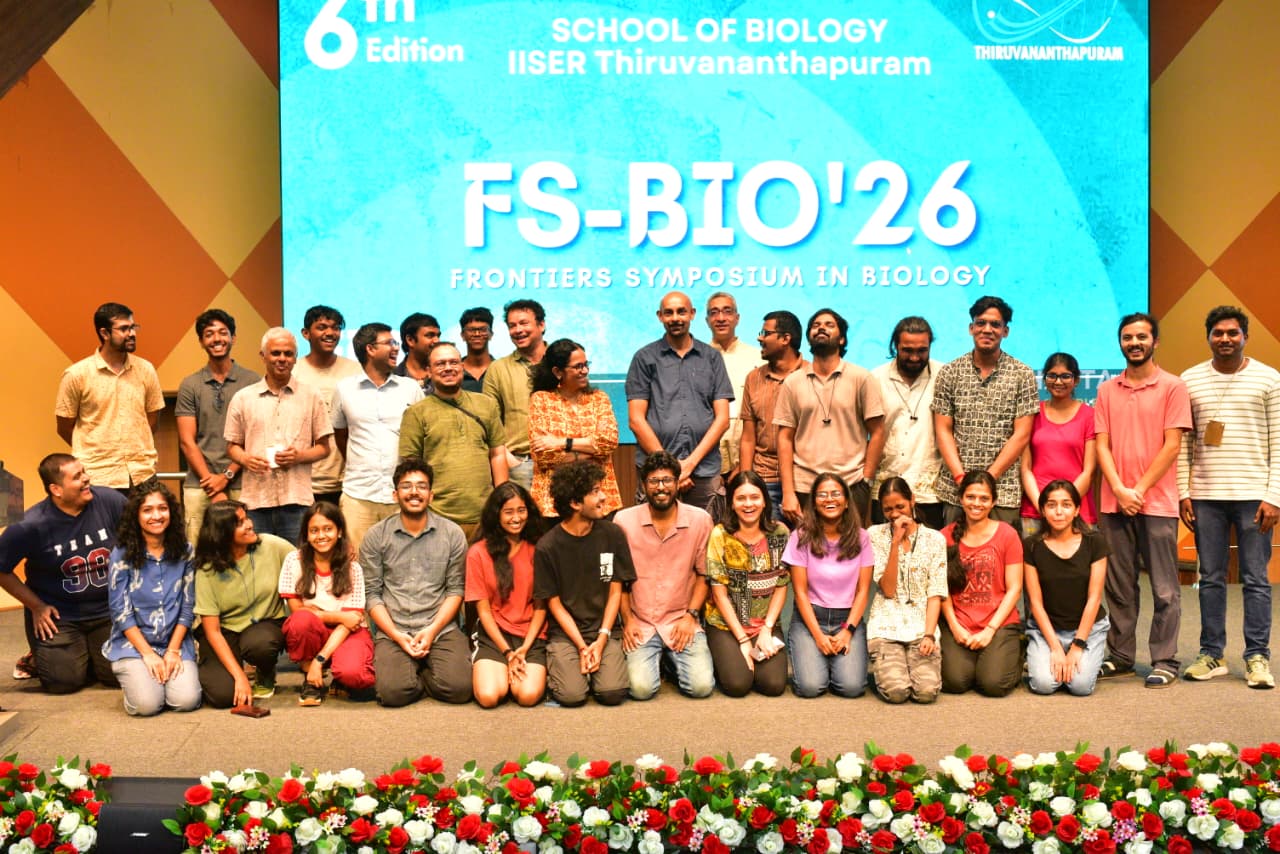
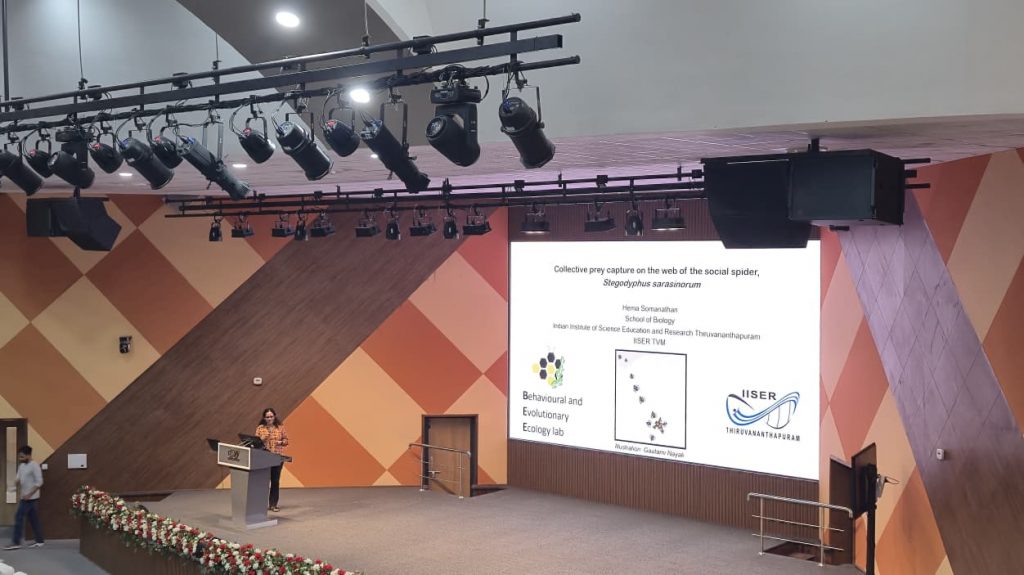
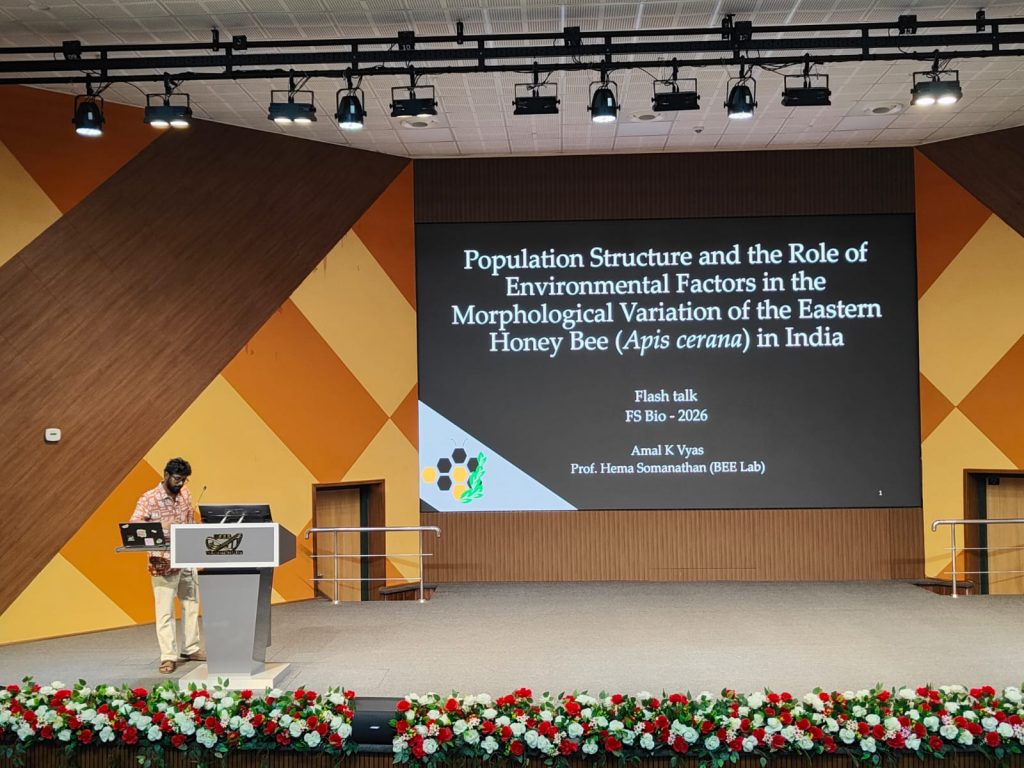
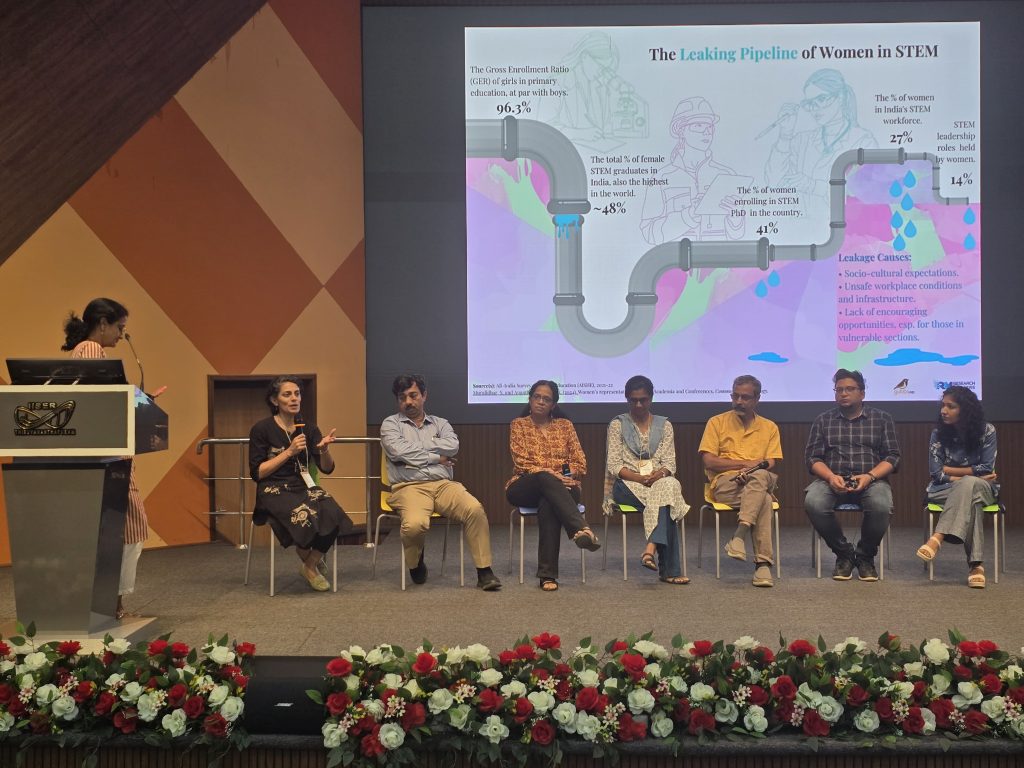
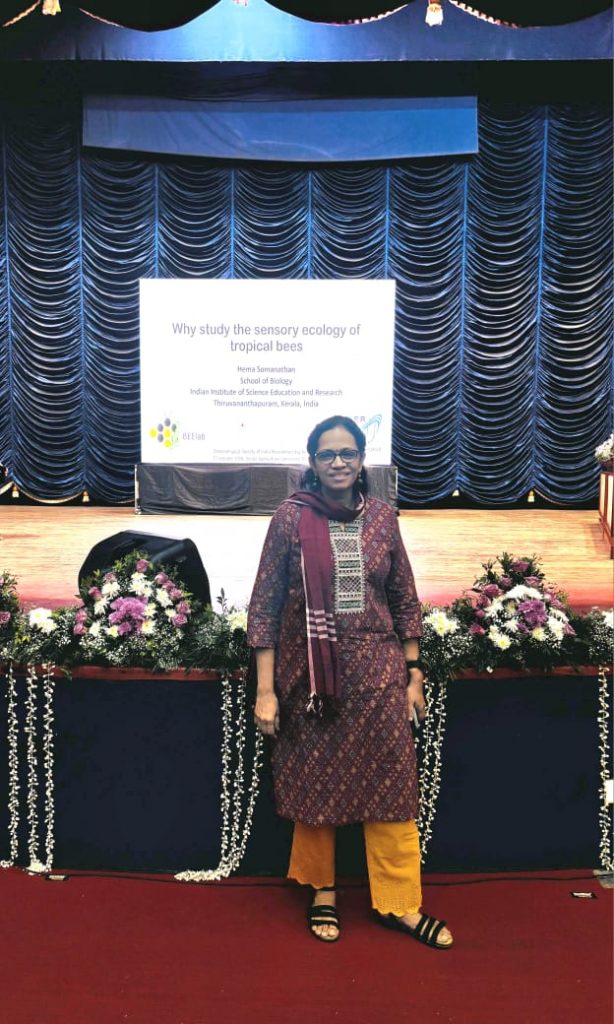
Hema gave the Entomological Society of India Foundation Day Lecture at the KAU Thrissur on the 27th of January 2026, about the sensory ecology of tropical bees.
Congratulations to Hema on being elected as a Fellow of the Indian Academy of Sciences, Bangalore!
Sachin presented a poster at the British Ecological Society Annual meeting 2025, held at Edinburgh, Scotland.
Navya P joined the lab as a Ph.D student in the Vasanth intake of 2026. Welcome!
Hema gave an invited lecture titled’Lights, Colour, Action: Vision in diurnal and nocturnal insects’ at the EMBO India Lecture course on Neuroethology – how the brain controls natural behaviours held at IISER Pune.
October
Hema gave a plenary talk titled ‘Moonlight mutualisms’ at the Indian Society of Evolutionary Biologists (ISEB7), held at IISER Berhampur.
Bhavya Dharmaraj was awarded the ANRF – National Post Doctoral Fellowship. Congrats Bhavya!
BES Travel Awards for Behavior 2025 were awarded to Sachin & Smriti
Dakshin Foundation & CES, IISc Grant for Behaviour 2025 for Avani
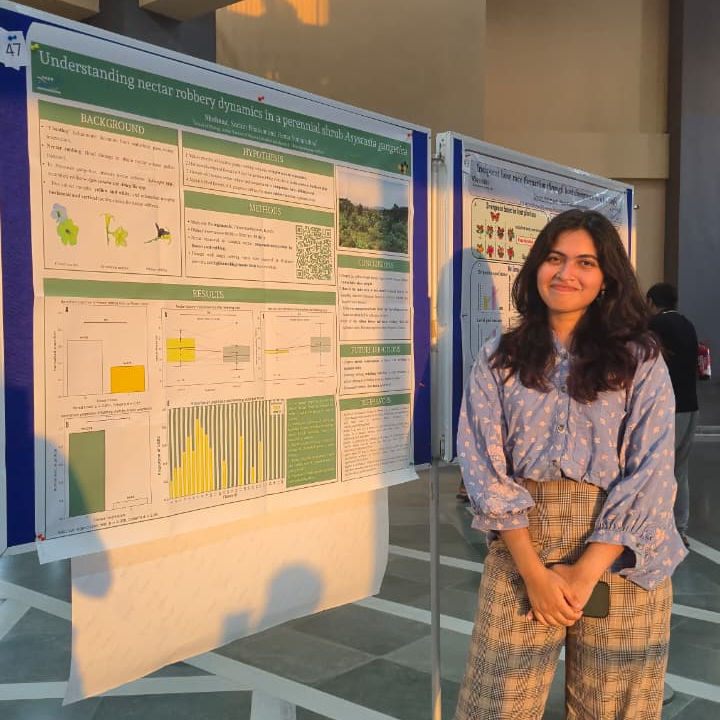
Navya won the award for the Best Poster in the Undergraduate Category.
Hema gave a plenary talk at the Indian conference on Conservation (ICCON 25) at WII, Dehradun, titled ‘Sensory and cognitive ecology of bees’
Avani, Navya, and Smriti completed their M.S. projects in the lab and received their B.S – M.S. degrees. Congrats to the new graduates!
Hema gave an invited talk titled ‘ Bees and our shared future’ at the 110 years of Zoological Survey of India conference, Kolkata.
Bhavya joined the lab as a Postdoctoral Fellow.
Aakash was awarded the Vincent Roth Fund for Systematics Research (VRF) by the American Arachnological Society. Congrats Aakash!
Asmi completed her tenure as a Postdoctoral Researcher in the lab and joined as a Dairy Instructor with the Kerala Dairy Farmers Welfare Board. Congratulations Asmi!
Hema gave an invited talk titled ‘Left in the dark: ‘Nocturnal pollinators and the plants they service in a brightly-lit world’ at the Journal of Experimental Biology – Company of Biologists symposium in Liverpool, UK.
Shatarupa joined the lab as a Postdoctoral Fellow.
Rohan joined the lab as a Ph.D. student in the Vasanth semester of 2025.
He has a BS-MS degree from IISER Bhopal.
Sachin has been awarded the Small Research Grant (spring 2024) from the British Ecological Society, London, for his work on co-flowering communities in the shola grasslands.
Additionally, he was also awarded a seed grant from the Association for Tropical Biology and Conservation (2024), for his work on flower-cheater dynamics in the southern Western Ghats, India.
Tejashwi joins the lab as a PhD student for the monsoon intake of 2024.
A very warm welcome!